
When to Keep Your Child Home
FEVER
A fever is usually a sign that the body is fighting an infection or contagious illness. A fever is generally defined as a temperature 1.5 degrees above normal body temperature of 98.6°F. Your child should be fever-free for 24 hours without the use of fever-reducing medication before returning to school.
DIARRHEA/VOMITING
Diarrhea and vomiting are often associated with infections or contagious illnesses, although they may occur for other reasons. If your child has diarrhea or vomiting along with other illness symptoms, please keep your child home. Your child should remain home for 24 hours after the last episode of diarrhea or vomiting.
RESPIRATORY ILLNESS
A child displaying any combination of fever, persistent cough, congestion, chills, or muscle aches should be evaluated by a healthcare provider and remain home from school. Students may return to school once they have been fever-free for 24 hours without fever-reducing medication and respiratory symptoms are mild and improving. (Examples include influenza, COVID-19, and RSV.)
RASHES
A child with an unidentified rash that is spreading and/or worsening over time should remain home and be evaluated by a healthcare provider.
CONJUNCTIVITIS (PINK EYE)
Symptoms such as tearing, redness, puffy eyelids, and/or eye discharge should be evaluated by a healthcare provider before returning to school. Students must remain home for 24 hours after starting medication and must have received at least two doses before returning to school.
HEAD LICE
If your child has live head lice, please keep your child home for treatment. Your child may return to school after treatment has been completed. Nits (eggs) should continue to be monitored, and combing/treatment should continue as needed.
Prescription Medications
All prescription medications (routine meds or antibiotics) to be given at school must come in a prescription bottle with a label from the pharmacy indicating the name of the child, prescription name, dose, and time to be administered. Parents must fill out a medication administration form giving the nurse and health associates permission to administer prescription medication to your student in the school setting.
Medication that is prescribed for 10 days or less:
- Medication that is to be taken 1-3 times a day can be given at home: before school, after school, and at bedtime.
- Medication that is to be taken 4 times a day-1 dose can be dispensed at school.
IDPH Childhood Illness Criteria 25/26
School Nurse Policies/Procedures
Student Immunization Information
School Health Requirements & Notices
Iowa Student Health Requirements for Schools
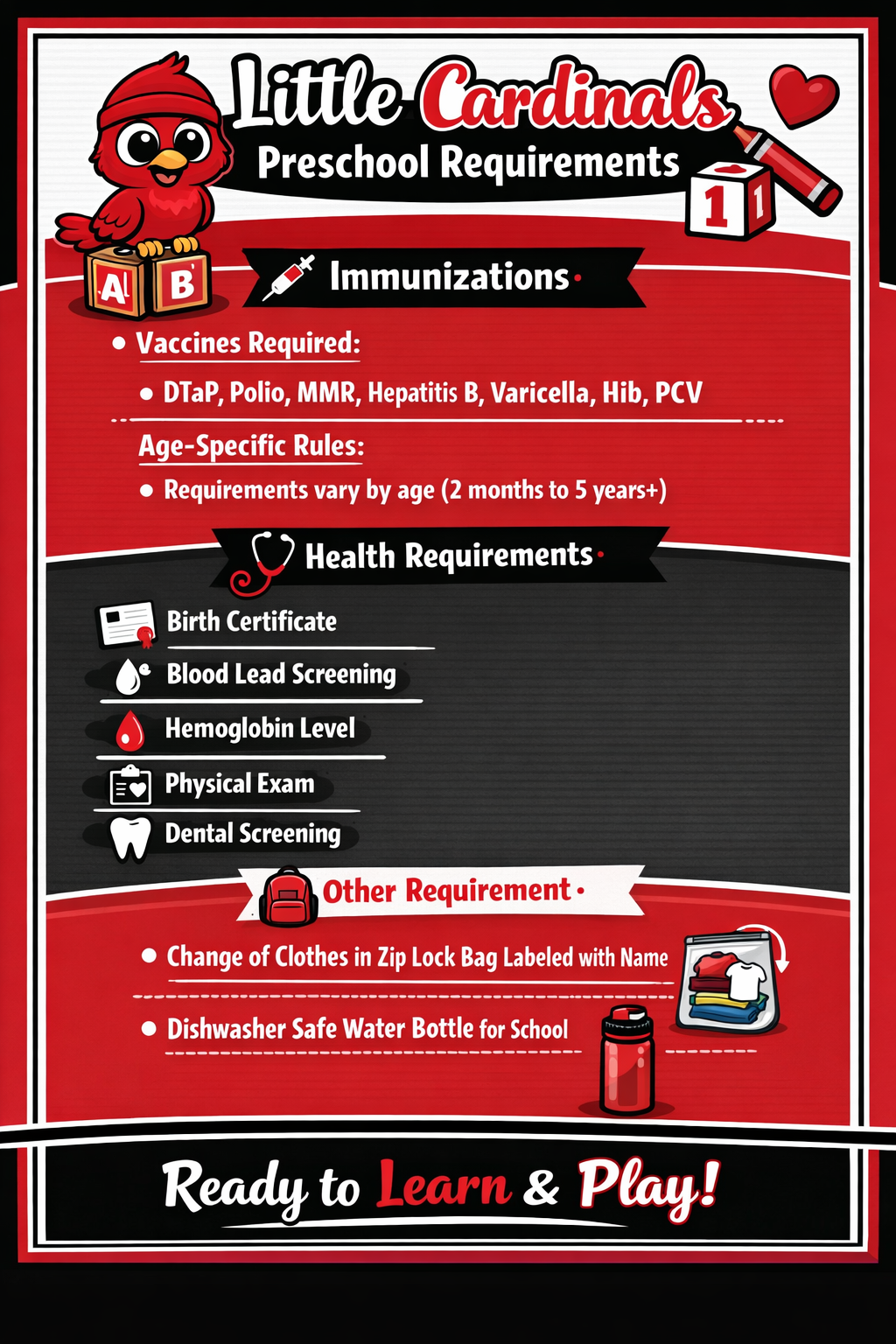
Little Cards Preschool Requirements
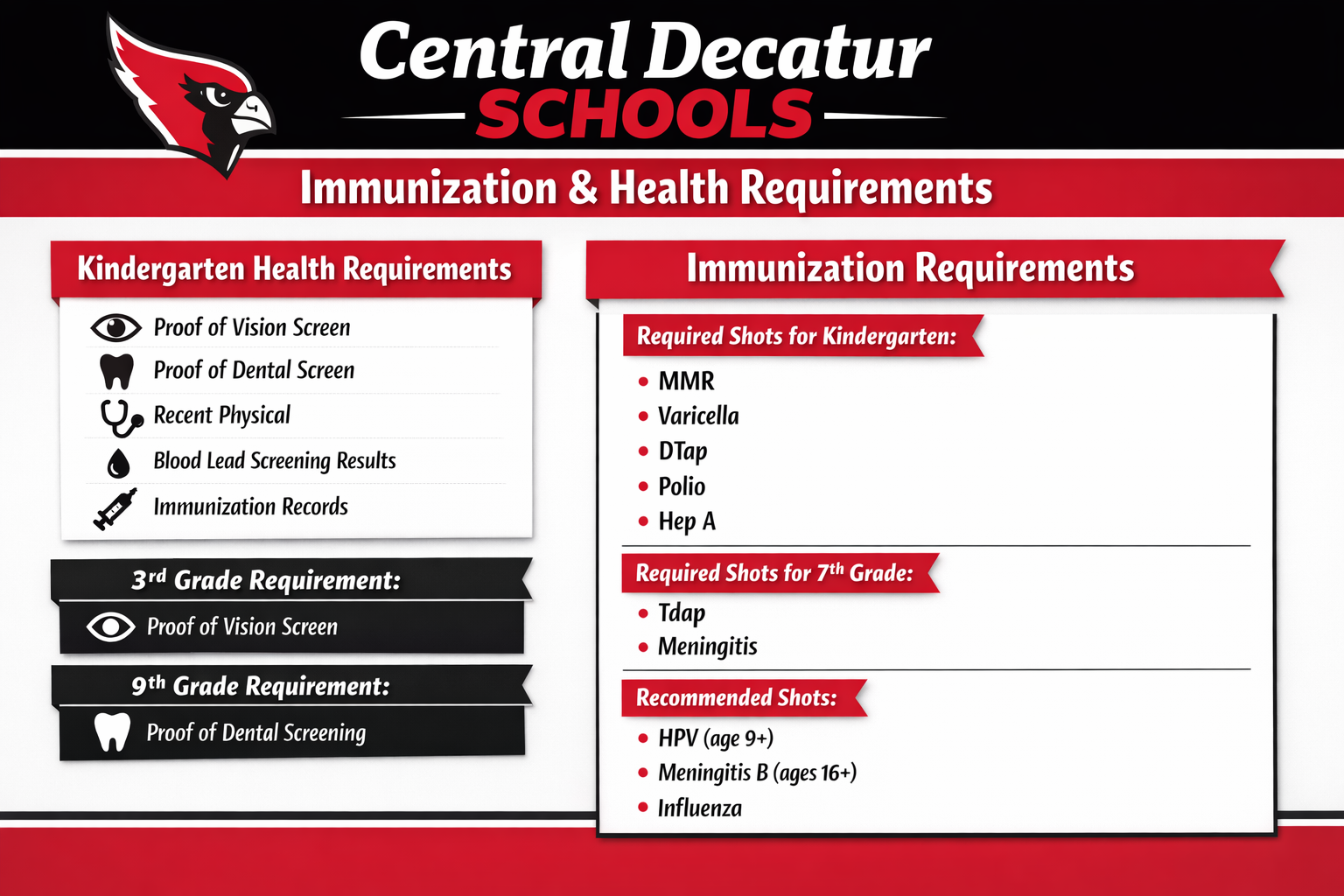
Kindergarten-Seniors Health Requirements
School Health Forms
Medication Administration Form
Emergency Action Plan-Anaphylaxis
Emergency Action Plan- Seizure
Certificate of dental screening
Student Resources
Mental Health First Aide Resources
Classroom Clinic-School Mental Health Services